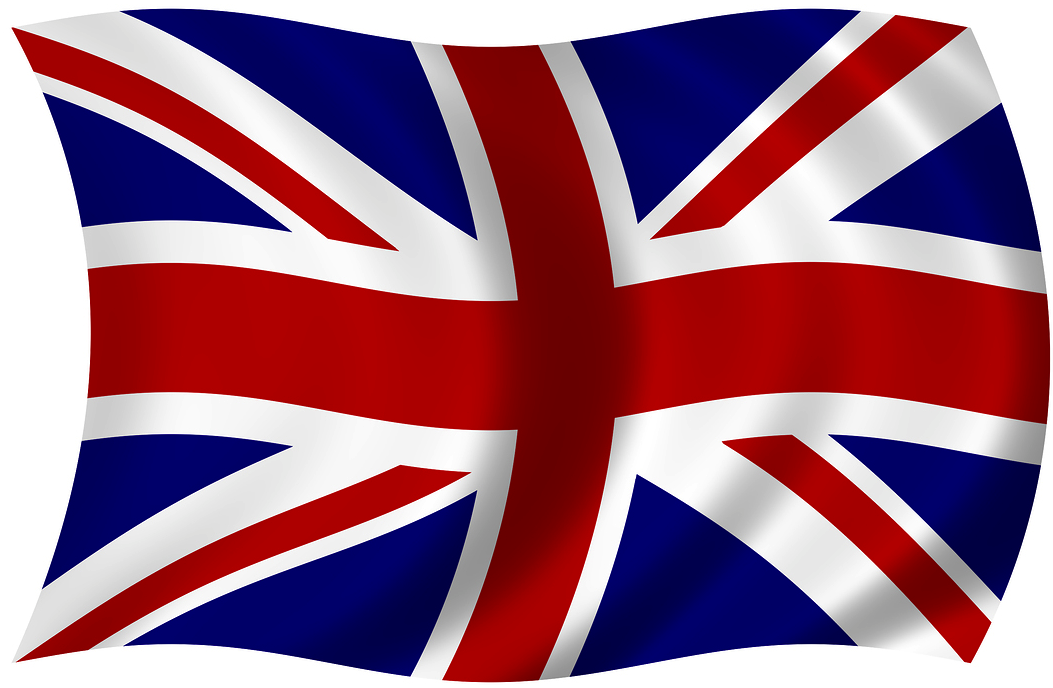
UK Flag
The first version of the British flag, designed in 1606 and used under the reigns of James I (1603-25) and Charles I (1625-49), included the red cross of England superimposed over the white cross of Scotland, with the latter’s blue field.
The Irish harp was included in the flag during the Commonwealth and Protectorate periods (1649-60), but it returned to its former form following Charles II’s Restoration in 1660. It remained in use until January 1, 1801, the effective date of Great Britain and Ireland’s legislative union.
The Union Jack is the most important of all British flags, and it is flown by United Kingdom representatives all over the world. It may be merged with another flag in specific allowed military, naval, royal, and other applications.

London Flag
The London flag is based on the English flag, with a red cross of St. George’s Cross on a white background and a crimson sword in the upper elevated canton (upper left fourth). The sword is thought to be a replica of the one that beheaded St. Paul, the city’s patron saint. The point of blade is always pointed upward. As a result, when the flag is held next to it, the sword is pointing upwards and hangs down on the left side.
The flag is flown from numerous structures in the city, including the Guild Hall (the city’s center of authority) and the palace, the formal residence of the Lord Mayor of London (Mayor Lord has a kind of flag, but it is destroyed) with its logo).
It can also be found at City of London Corporation-run off-site locations such as Tower Bridge, Heathrow Airport’s animal refuge, and Hampstead Heath.

Flag Day
The Union flag may be flown at any time of year. The Union flag is flown over numerous government buildings unless it is being maintained or there is a legitimate reason to lower it. The Union flag, which is traditionally flown from sunrise to sunset, may also be flown at night, although it must be lit.
A Union flag is flown at the front or roof of numerous businesses and organizations across many sectors and industries. Hotels, restaurants, and high-end retail establishments are known to fly the Union flag as a traditional and lavish manner of displaying patriotism for the United Kingdom and British Heritage or to indicate the number of nations in which they proudly operate.